Web & App Development
Custom Software, Web & Mobile Apps: Why Businesses Outgrow Generic Tools
Why off-the-shelf websites and generic apps stall business growth—and when custom web and mobile app development pays off. Learn how to turn website visitors into real bookings and enquiries with Opygen.
Faysal Mridha5 min read
Custom Software, Web & Mobile Apps: Why Businesses Outgrow Generic Tools
Every growing business hits the same wall eventually. You launch with a template website, a few off-the-shelf SaaS subscriptions, and a handful of spreadsheets. For the first year, that patchwork works. Then your team grows, customer requests get more specific, and suddenly you are paying for six separate tools while your staff still spends hours copying data from one tab to another.
According to GreetNow's 2026 Website Conversion Rate Study, the average website converts just 2.35% of visitors, meaning roughly 97 out of 100 people leave without booking or enquiring—while top-performing sites convert at 8% to 12%. At the same time, Contentsquare's 2026 Digital Experience Benchmark Report found that desktop conversion rates still run 74% higher than mobile because most businesses treat mobile web and app experiences as an afterthought.
That gap is why custom websites, web applications, and mobile apps have shifted from "nice-to-have" luxuries to core revenue infrastructure. When your digital presence is engineered around how your customers actually buy—and how your team actually delivers—every visitor has a clear path from discovery to paid action.
Why Businesses Need Custom Web & App Development (Not Just Another Template)
Off-the-shelf templates and generic SaaS tools are built for the average company. If your business operates with unique pricing rules, multi-step client approvals, field crews, or specialized booking workflows, generic tools force you into a workaround culture.
Here are the four moments when businesses need custom development:
Your website gets views, not enquiries: A brochure site with a buried "Contact Us" form forces prospects to wait for an email reply. Custom booking and enquiry pages let customers configure their service, see transparent scope, and submit or pay in under 60 seconds.
Mobile users drop off before converting: When your field staff or customers rely on clunky mobile browsers to check schedules, upload photos, or approve quotes, tasks stall. A dedicated mobile app or progressive web portal removes friction on the devices people actually carry.
You are paying for unused SaaS seats: As highlighted in ZentixSoft's 2026 Total Cost of Ownership Analysis, growing companies often spend tens of thousands annually on rigid SaaS platforms where 40% of features sit unused while critical custom workflows still have to be done manually.
Your tools do not talk to each other: When website leads land in an email inbox, quotes live in PDFs, and payments sit in a separate gateway, leads fall through the cracks.
Websites vs. Web Applications vs. Mobile Apps: Which One Do You Need?
Not every problem requires a native iOS and Android app. Choosing the right layer saves months of development time and protects your budget.
Digital Layer | What It Actually Does | Best Fit For | Typical Business Impact |
Conversion-Focused Business Website | Presents your services, social proof, local SEO pages, and instant booking or enquiry forms | Service businesses, agencies, clinics, real estate teams | Turns passive search and social traffic into qualified leads 24/7 |
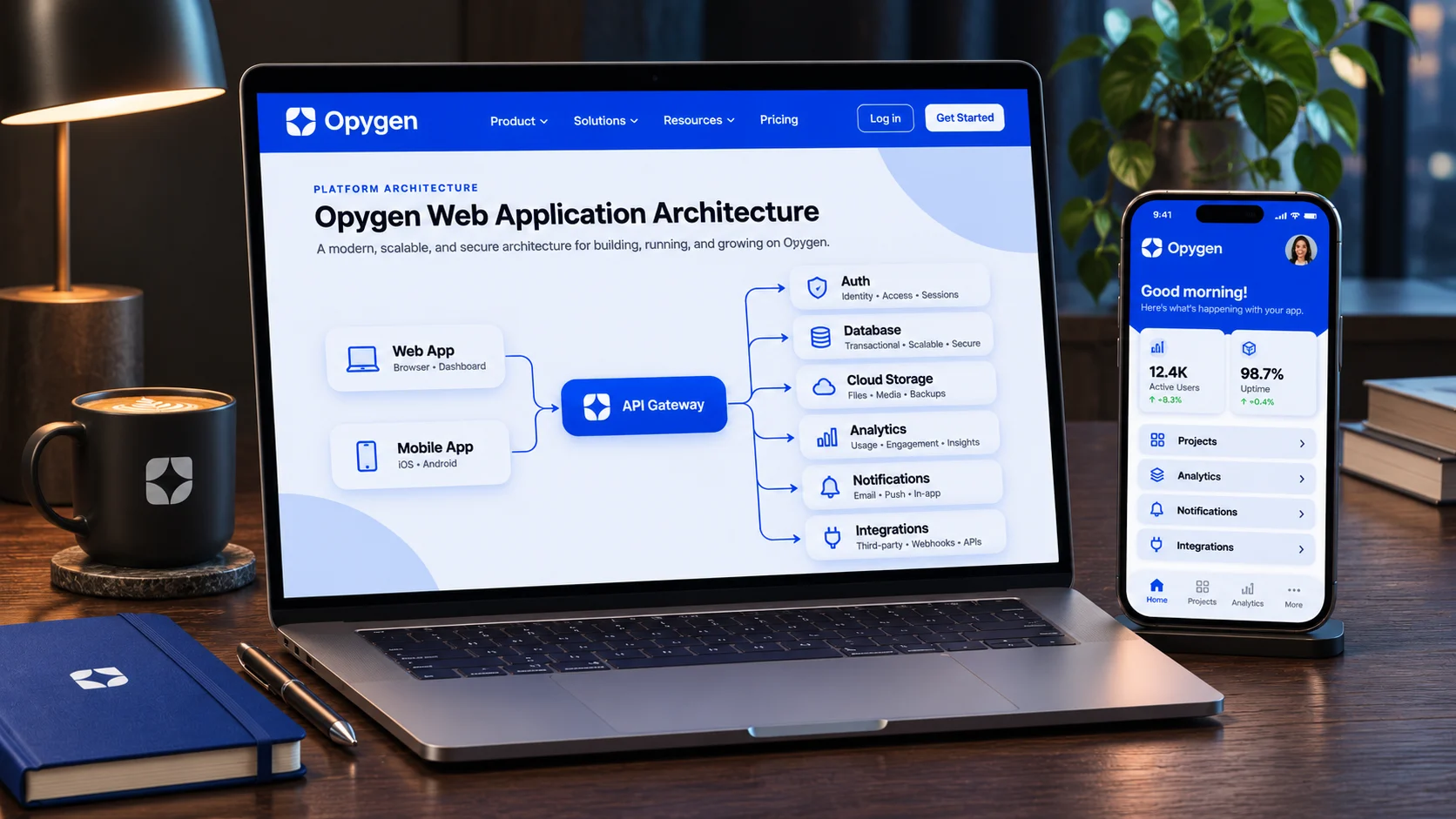
Custom Web Application & Client Portal | Handles logins, role-based dashboards, live quoting, inventory, and internal team workflows in any browser | Operations teams, B2B vendors, multi-location agencies | Replaces spreadsheets and centralizes customer, job, and billing records |
Dedicated Mobile App (iOS / Android) | Provides instant push notifications, GPS check-ins, offline checklists, and on-the-go client updates | Field service crews, delivery/dispatch teams, high-frequency consumer brands | Eliminates WhatsApp group chaos and speeds up on-site execution |
As noted in GainHQ's 2026 Build vs. Buy Guide, many smart companies adopt a hybrid approach: keep standard commodities like email or accounting off-the-shelf, and build custom websites, portals, or mobile apps around the workflows that directly win customers and protect margins.
5 Things That Make a Business Website Convert Visitors Into Bookings
If you invest in a custom website or web app, design it around conversion mechanics—not just visual polish:
Clear above-the-fold positioning: Within three seconds, a visitor should know what you do, who you serve, and the exact button to click next.
Guided enquiry or booking flows: Replace generic 10-field contact forms with 3-step interactive selectors (service type, location or size, preferred date) that feel effortless on mobile.
Speed and mobile-first layout: Slow pages kill paid and organic traffic before a headline even loads. Clean, modern code keeps mobile interaction instant.
Integrated proof at the point of decision: Place verified client reviews, project case studies, and clear deliverables right beside your booking CTA—never hidden on a separate page nobody clicks.
Direct CRM and payment connection: Every enquiry or booking should land automatically in your CRM or operations dashboard with instant confirmation emails and payment links attached.
How Opygen Approaches Custom Websites, Apps, and Software
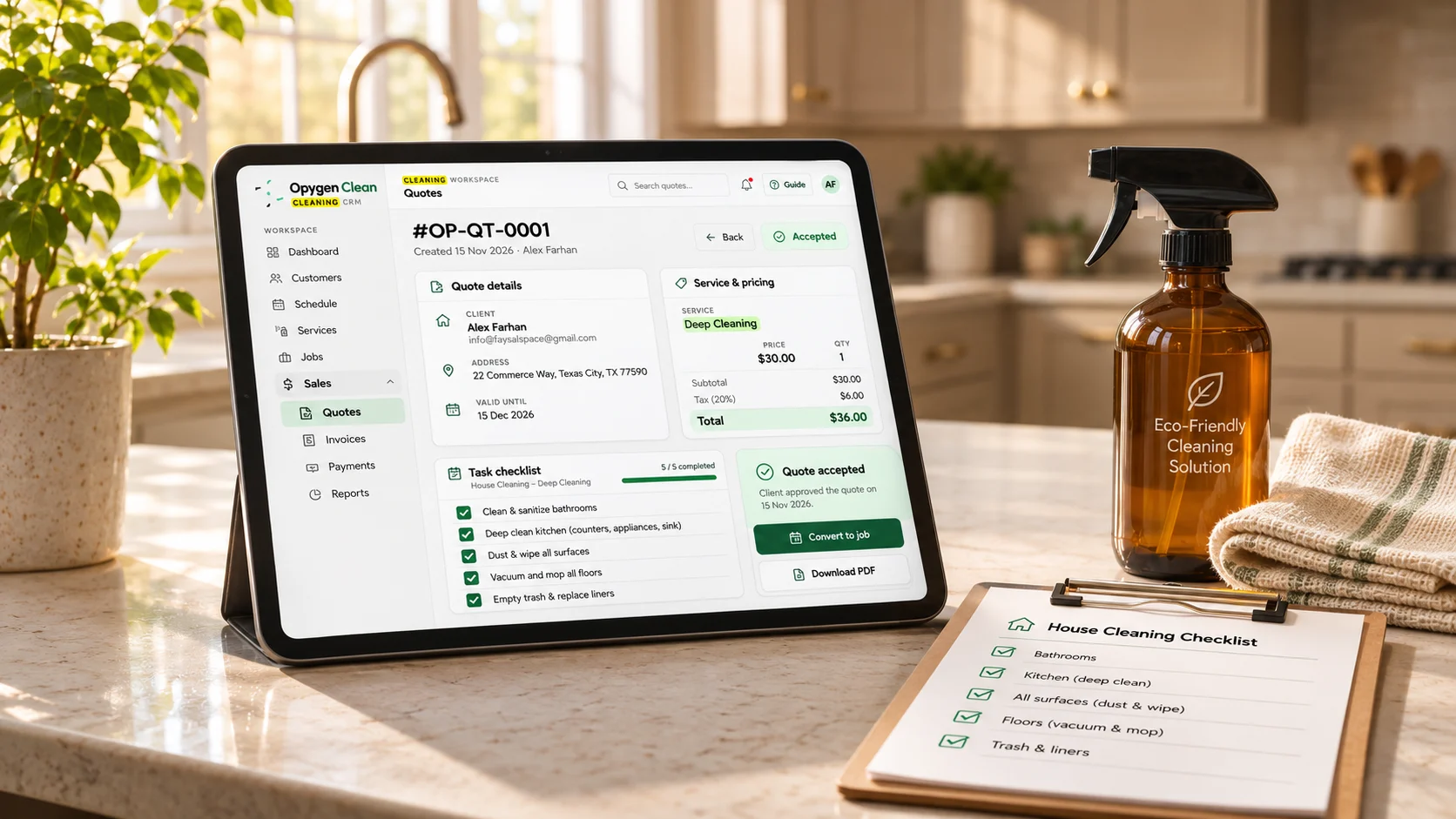
At Opygen, we do not just build isolated pages—we engineer connected software products and custom platforms around the working day of your business. Because our team builds and operates vertical SaaS products like Opygen Clean and Opygen Estate in-house, we understand how real operations, customer portals, and conversion websites fit together.
Whether you need a high-converting business website, a custom client and staff web portal, or a tailored mobile application built from scratch, our process starts with your daily workflow:
Step 1 · Understand the workflow: We map where customer details, team responsibilities, and follow-up steps currently slow down.
Step 2 · Build around your business: We design and engineer the website, web app, or mobile interface around your exact terms, roles, and payment flows.
Step 3 · Connect & keep improving: We link your site, CRM, and tracking analytics so you see exactly where every enquiry comes from—and refine as you scale.
Ready to stop patching together generic templates? Explore Opygen's Website & Application Services or talk to our engineering team about your next custom build.